

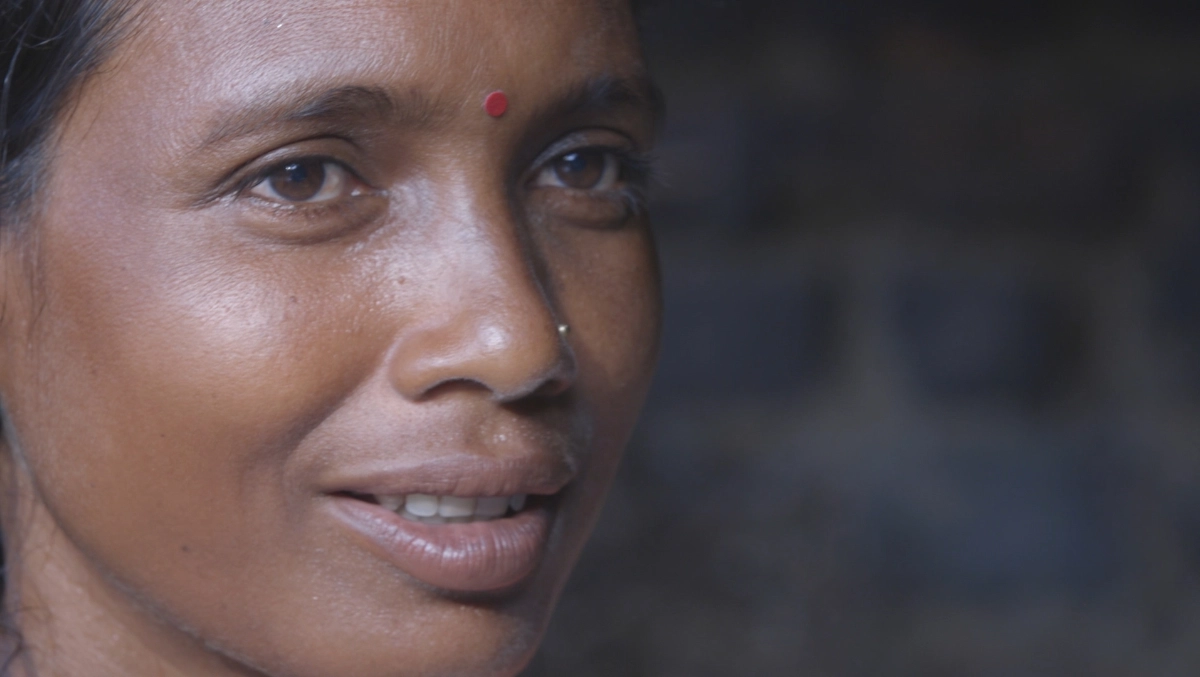
‘Behind India’, by Fernando Vera, is now available on Filmin
From today, this 77-minute documentary on women’s social awareness will be available on the national platform.
ZARAGOZA. Fernando Vera is a filmmaker from Zaragoza who has been living in San Sebastián for over a decade. He has plenty of projects on the go: he is working on a new documentary, *The Chords of Memory*, which explores the therapeutic effects of music on Alzheimer’s patients. “All the filming is done; there are perhaps a few interviews left to do, but I’ll be getting started on the editing soon,” he says. At the same time, he is preparing another project, inspired by the book *Nerín. Memorias compartidas’ (Pregunta), a collective narrative of memories and feelings that has been more than just a modest publishing success.
Fernando Vera is in the news for another reason: as of today, the Filmin platform is featuring his documentary ‘Behind India’, a 77-minute film shot over the course of a month in various locations across this country of 1.3 billion people, countless languages, races and, above all, ‘contrasts’, says Vera. ‘It is a wonderful country, with incredible landscapes and pockets of misery and poverty that are difficult to explain,’ he notes. He adds that he had been a fan of Filmin for some time. ‘I really enjoy being part of the platform. It’s small, enthusiastic and national, and it’s committed to Spanish cinema and to small films and projects, and I really like that.’
‘Behind India’ is a project that grew out of a proposal by the San Sebastián-based NGO Calcuta Ondoan, ‘which is very well established there. It’s small, but it helps around 50,000 people. Its director, Iñigo Eguren, suggested I make a film and put forward the idea of focusing on social protests and demonstrations. I thought it would be difficult, almost impossible, but we managed to pull it off. He is the co-screenwriter of the film with me,” he says. Vera has been surprised and moved by the women’s attitude: they are willing to travel for two whole days to join a protest. “Justice is conspicuous by its absence. The same goes for human rights. Little by little, people are becoming more aware and daring to speak out and rebel. I talk about all of this: ecofeminism, food security, healthcare, gender-based violence, and so on,” she explains.
The documentary may seem paradoxical or misleading: the country is so beautiful, so rich in varied landscapes and light in an exotic setting, that it might sometimes feel as though one is travelling to Arcadia. ‘That’s not the case, of course. Not at all. The central thread of the documentary, or the figure who ties the story together, is the young Santoshi, a village woman and mother of two, who lost another child. She works on a rice plantation and has no running water at home. She decides to demand what is rightfully hers. And she sets out on a journey to claim her rights in parliament.’ In one of his conversations, with his tanned face and sparkling eyes, he confesses: ‘My life and my homeland are one and the same.’